Business

Why Are Jewellery Companies Consolidating in India? The Business Strategy Behind GRT's TBZ Acquisition

GRT Jewellers' ₹1,034-crore acquisition of TBZ is more than a takeover. It shows why companies often choose to buy an established business rather than spend years building the same capabilities from scratch.

Published on 9/1/2026
Why Are Jewellery Companies Consolidating in India? The Business Strategy Behind GRT's TBZ Acquisition
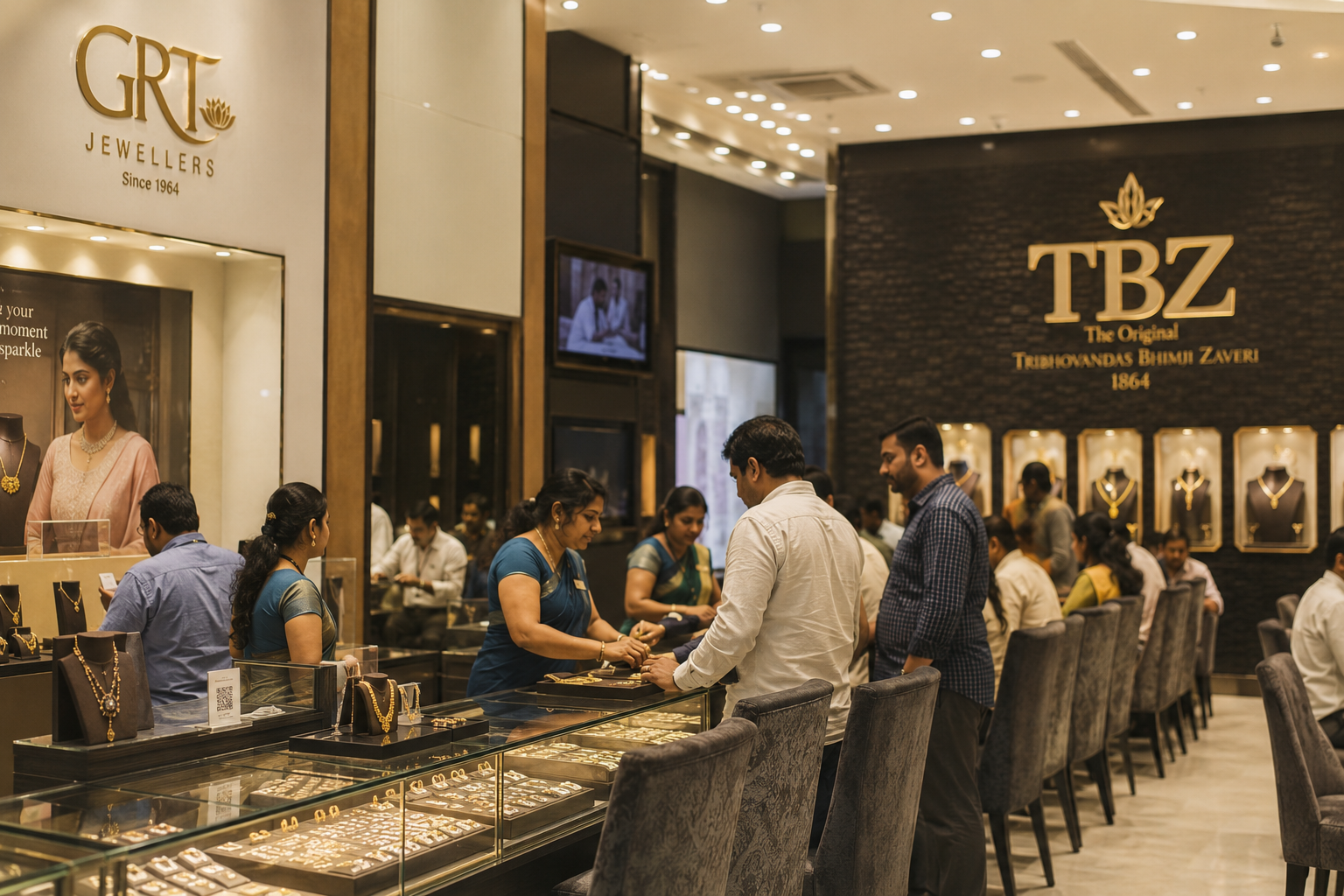
GRT Jewellers India has agreed to acquire a 74.12% controlling stake in listed jewellery retailer Tribhovandas Bhimji Zaveri, better known as TBZ, for up to ₹1,033.71 crore. The deal hands GRT access to TBZ's 37-store network, taking the combined footprint from GRT's current 69 stores across India and Singapore to roughly 106 stores in India. GRT will also make a mandatory open offer for the remaining 26% of TBZ under SEBI's takeover rules. Two long-established jewellery businesses, two very different strengths - GRT's stronghold in southern India, TBZ's pan-India brand tracing back to a single Mumbai store in 1864. Which makes this a genuinely useful lesson in something every growing company eventually confronts: when does it make more sense to build a capability yourself, and when does it make more sense to simply buy it? A company trying to get bigger really only has two options: build, or buy. If a jewellery retailer wants a presence in thirty new cities, it can spend years finding locations and hiring staff - or acquire a company that already has all of that in place. That second path is exactly what makes the GRT-TBZ deal worth paying attention to. GRT has agreed to acquire 74.12% of TBZ for up to ₹1,033.71 crore, subject to regulatory approval, and will separately make a mandatory open offer for roughly another 26% under SEBI rules. The deal brings 37 TBZ stores into the fold and pushes GRT's footprint to around 106 stores across India. Underneath the headline number sits a more interesting question: when is it smarter to build something yourself, versus buying a business that's already built it? Imagine GRT expanded into western and northern India organically instead. It would need to scout locations, negotiate leases, hire staff, and slowly earn the trust of customers who've never heard of the brand - while competitors already sitting in those markets have a head start. Jewellery is a particularly trust-sensitive category; someone buying gold or diamonds is weighing reputation and transparency, not just picking the nearest storefront. A new store gives you a location. It doesn't automatically give you trust - and that's exactly the gap an acquisition can close in one move. Buying TBZ isn't really about acquiring 37 buildings - it's about acquiring an entire, functioning business ecosystem that took decades to build. The store network is the most visible asset, but far from the only one. GRT is also picking up an established brand, an existing customer base, experienced staff, supplier relationships, and existing e-commerce and sourcing capabilities - things that would take years to build from scratch. Acquisitions like this are sometimes described, fairly accurately, as buying time. TBZ's own history adds a layer worth noting. The company traces back to 1864, a single store in Mumbai's Zaveri Bazaar that grew into a 37-store pan-India retailer. History alone doesn't automatically make a business valuable, but in categories where trust drives the purchase decision, a long track record becomes a genuine economic asset - brand equity, the extra value a business carries simply because of the reputation attached to its name. GRT isn't only buying stores and staff - it's buying a slice of brand equity built over generations. Geography is arguably the most strategically interesting part of this deal. GRT is strong in the south; TBZ is established more broadly across the rest of the country - a complementary fit rather than two companies fighting over the same customers. Opening five new stores a year gets you to roughly fifty after a decade of steady growth. Acquiring a company with 37 existing stores gets you there essentially the moment the deal closes, integration aside. The acquisition route is dramatically faster — but that speed comes at a price: a premium, and the risk of taking on someone else's business. Scale brings its own advantages too. A retailer buying ₹1,000 crore of gold annually negotiates from a stronger position than one buying ₹500 crore, and combining the two pushes volume to around ₹1,500 crore, potentially unlocking better supplier terms. The same logic extends to technology and back-office costs. These are cost synergies, but they're never automatic - they have to be actively executed, not just assumed. A larger combined company can also grow revenue by pooling customer bases; a GRT customer relocating from Chennai to Mumbai could stay within the brand's expanded network. These are revenue synergies, though "potential" does a lot of work there - M&A creates the opportunity for upside, not a guarantee. GRT isn't planning to fold TBZ into itself entirely - both brands will keep operating side by side, a sensible call given a brand is worth more than its logo. Integration doesn't have to mean total absorption; often the smarter path is combining the back end (shared procurement, technology, and finance) while keeping customer-facing brands distinct, capturing efficiency without damaging the brand equity that made the deal worth doing. Because TBZ is publicly listed, there's a regulatory layer a private acquisition wouldn't carry. Buying a controlling stake in a listed company triggers obligations toward shareholders who didn't choose the new controlling owner - exactly why GRT must make a mandatory open offer for the remaining roughly 26%, giving those shareholders a regulated exit rather than being locked in by default. Why would TBZ's promoters sell at all? The Zaveri family built the business from a single Mumbai shop into a national chain over generations, so this isn't trivial. But eventually the question becomes who's best positioned to carry a business into its next phase, and a strategic buyer can bring capital, management bandwidth, and geographic reach that would otherwise take years to build independently. Selling control can hand promoters liquidity while the business keeps growing on a bigger platform, and reports suggest some may stay involved through employment or consultancy arrangements - a reminder that ownership changing hands doesn't mean the people who built the business simply vanish.The ₹1,033.71 crore price tag, on its own, doesn't tell you if the deal is expensive or cheap. That requires weighing TBZ's revenue, profitability, debt, and growth potential against what GRT paid - buyers often pay more than a company's standalone value because they expect additional value once the businesses combine. That extra layer is called synergy value, and it's also where the biggest risk hides. If GRT is banking on, say, ₹200 crore in annual synergy value and those savings never materialise - customers resist change, systems don't integrate cleanly, key employees leave - the deal can destroy value instead of creating it. Finding an attractive target is the easy part of M&A. The real test starts after the deal closes. Compare this to GRT simply opening 37 new stores on its own - real estate, construction, staffing, and years waiting for each location to mature. With TBZ, most of that already exists on day one, which is the core advantage of buying instead of building, and exactly why acquisitions carry a real price tag: the buyer pays for years of development the seller already completed. This deal also says something about where India's jewellery industry is heading. The sector has long been dominated by independent, regional players, but organised chains have steadily gained ground, investing more in branding, technology, and financing than smaller players typically can. As customers increasingly care about certification and transparency, scale becomes a real edge - though local jewellers with deep community trust aren't going anywhere. The GRT-TBZ deal is one example of how bigger players are choosing to grow: not only by opening stores, but by consolidating existing ones. The build-versus-buy question shows up in nearly every industry. Building from scratch means slower growth but full control. Buying means faster expansion and instant capability, at the cost of a premium and real integration risk. Neither wins by default - it depends on how quickly a company needs to grow, how expensive organic expansion is, and whether the buyer can genuinely improve what it's acquiring rather than just owning it. At its core, this deal was never just about jewellery - it's about time. Companies spend years building brands, distribution, and customer trust, and another company can sometimes acquire all of it in one transaction. That's the real reason businesses buy other businesses: not simply for revenue, but for capability, geography, brand equity, and time itself. GRT already had a strong southern base; TBZ brings 37 additional stores and a 162-year brand legacy. If the two combine well, the result could be a stronger national platform. But that won't be decided by today's announcement - it'll be decided by what GRT does with TBZ over the next few years. Buying the company was always the easy part. Creating real value from it is where the harder work begins.
GRT JewellersTBZTribhovandas Bhimji ZaveriM&AMerger and AcquisitionJewellery IndustryBusiness StrategyMarket ConsolidationRetail StrategyEconomies of ScaleBrand AcquisitionCorporate FinanceSEBIOpen OfferIndian BusinessRetailCapital AllocationScholarsView

More in Business