India's Inflation Is Rising Again - Will the RBI Raise Interest Rates?
Economy

India's Inflation Is Rising Again - Will the RBI Raise Interest Rates?

Published on 7/19/2026

Summary

India's retail inflation climbed to 4.38% in June 2026, pushing above the Reserve Bank of India's medium-term target of 4% for the first time in 17 months. The increase was driven largely by higher food and fuel prices, geopolitical tensions weighing on crude oil markets, and an uneven monsoon. With inflation now above target, economists are debating whether the RBI will raise the repo rate in its upcoming policy meetings. But this is about more than one number. It's a chance to understand how inflation shapes interest rates, why central banks intervene, how global events reach into household budgets, and what all of this means for consumers, businesses, and investors alike.

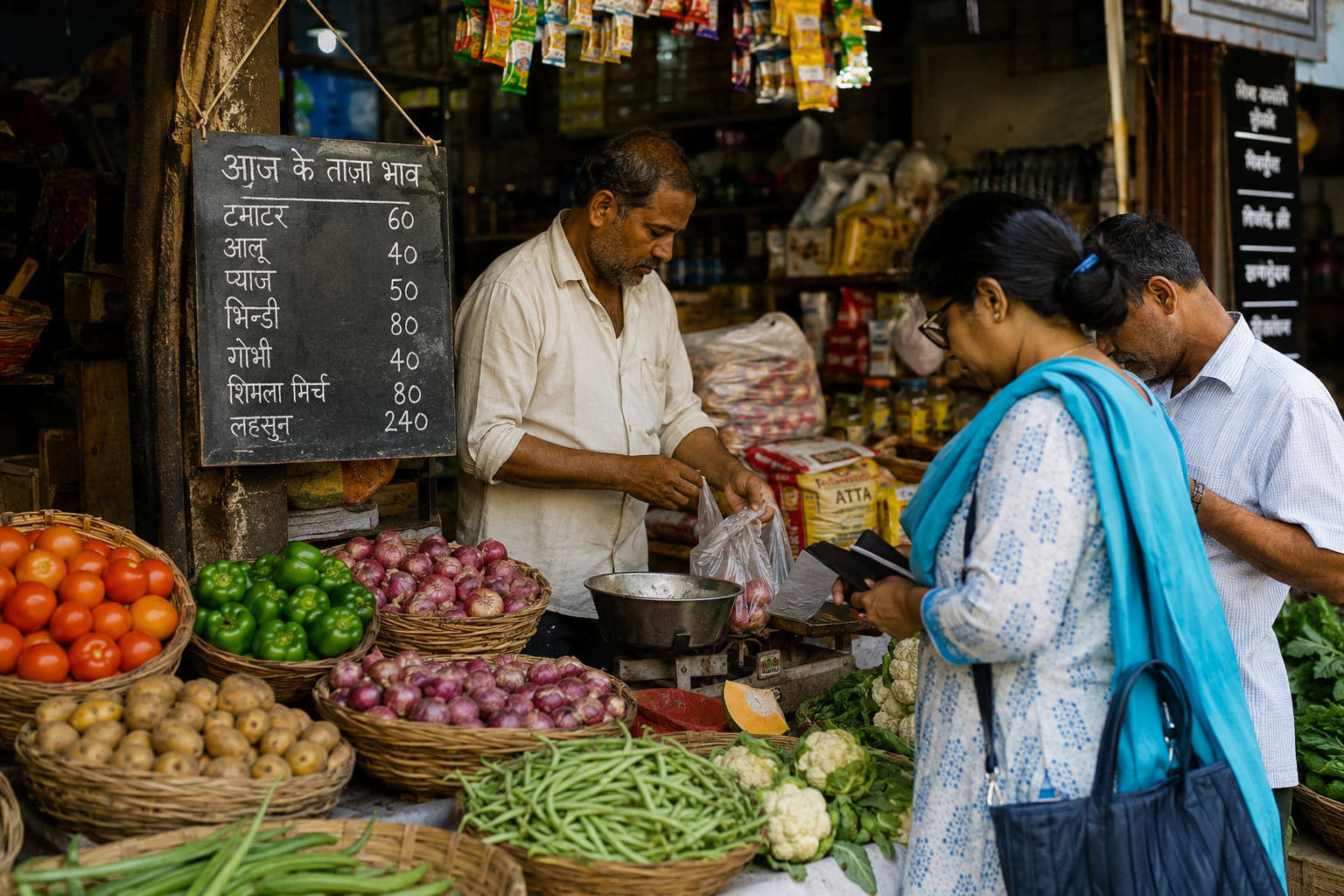
Every month, millions of Indians feel prices shift — vegetables cost more, fuel gets pricier, restaurant bills creep up, and household budgets stretch further than expected. These aren't random inconveniences; they're the lived experience of one number economists call inflation. Retail inflation recently rose to 4.38%, crossing the RBI's 4% target for the first time in nearly a year and a half. The natural question that follows: will the RBI raise interest rates to bring it back down? To answer that, it helps to first understand what inflation is, why it matters, and how central banks typically respond when prices start climbing too fast. According to the latest government data, India's Consumer Price Index (CPI)-based retail inflation rose from 3.93% in May 2026 to 4.38% in June 2026 — exceeding economists' expectations and moving above the RBI's 4% medium-term target. The main drivers: Rising food prices Higher fuel costs Elevated global crude oil prices Supply disruptions tied to geopolitical tensions An uneven monsoon affecting agricultural output Importantly, 4.38% still sits comfortably within the RBI's official tolerance band of 2%–6%. What's drawing attention isn't the absolute level, but the fact that it has crossed the 4% target after months of relative stability — a signal of renewed inflationary pressure. Inflation is the general rise in prices over time, which erodes the purchasing power of money. Picture a grocery basket that cost ₹5,000 last year. If the same basket now costs ₹5,219, prices have risen by roughly 4.38%. Your salary may be unchanged, but that same paycheck now buys less than it did before. In that sense, inflation functions like an invisible tax on your income. A moderate amount of inflation is generally healthy — it often reflects growing demand and economic activity. But when inflation stays persistently high, it breeds uncertainty and chips away at people's ability and willingness to spend. Several domestic and international forces are converging at once. 1. Rising food prices. Food carries significant weight in India's CPI basket, so when vegetables, cereals, pulses, edible oils, or milk get more expensive, inflation moves quickly. This year, delayed and uneven monsoon rainfall disrupted agricultural supply in several regions, pushing up prices for a range of food items. 2. Higher fuel prices. India imports nearly 85% of its crude oil needs, so rising global crude prices directly raise the cost of fuel imports. That, in turn, raises transportation costs — and transportation touches nearly every industry. As logistics get pricier, businesses pass those costs on to consumers, and the effect ripples across sectors. 3. Geopolitical tensions. Recent developments in West Asia have unsettled global energy markets. Any instability involving major oil-producing regions tends to move global crude prices almost immediately, and given India's heavy reliance on imported oil, that instability translates quickly into domestic inflation. 4. Supply-side pressure. Inflation doesn't always stem from people buying more — sometimes producers simply can't supply enough. Poor weather, transport bottlenecks, and global disruptions can restrict supply even while demand holds steady, and basic economics tells us that when supply falls against unchanged demand, prices rise. The Reserve Bank of India carries one central mandate: maintain price stability while supporting economic growth. When inflation runs too hot, the consequences compound quickly — purchasing power erodes, household savings lose real value, businesses face higher input costs, investors demand higher returns to compensate for risk, and long-term economic planning becomes harder for everyone. That's why the RBI targets 4% inflation, with a tolerance band of 2% to 6% to absorb short-term fluctuations. When inflation rises, the RBI's primary lever is the repo rate — the interest rate at which commercial banks borrow from the central bank. Raising the repo rate sets off a chain reaction: borrowing becomes costlier for banks, which raise their own lending rates; consumers borrow less; businesses delay expansion plans; overall spending slows; demand eases; and inflation gradually cools. Economists call this chain monetary policy transmission. The goal isn't to halt economic activity altogether, but to keep excessive demand from pushing prices higher still. Will the RBI Actually Raise Rates? This is the question dominating financial markets right now, and the honest answer is: not necessarily — but the odds have gone up. Inflation has crossed the 4% target, but it remains well below the 6% upper tolerance limit. Some economists expect the RBI to wait and see whether elevated inflation persists over the next few months before acting. Others argue that if food and fuel pressures broaden and prove sticky, tighter policy may become unavoidable. In short, the central bank is likely to stay data-dependent — weighing inflation trends, growth momentum, oil prices, and monsoon conditions before making any move. If you have a home loan: A rate hike could push EMIs higher, and new loans would become costlier. If you hold fixed deposits: Depositors typically benefit from rate hikes, as banks often raise FD rates in response — though the timing and magnitude vary. If you run a business: Higher borrowing costs make expansion pricier, which may lead companies to delay investment or hiring until financing conditions ease. If you invest in stocks: Higher rates can squeeze corporate profitability and pressure equity valuations broadly, though certain sectors — banking in particular — may benefit if lending margins widen. Think of the economy as a car on the highway. Low inflation is a comfortable cruising speed. High inflation is the car accelerating past a safe pace. The RBI's interest rate is the brake — raising it slows borrowing and spending enough to bring inflation back under control. The hard part is applying just enough brake to slow things down without stalling the engine altogether. That balancing act is, in essence, the core challenge of modern central banking. Key Takeaways India's retail inflation rose to 4.38% in June 2026, crossing the RBI's 4% target for the first time in 17 months. Food prices, fuel costs, geopolitical tensions, and an uneven monsoon are the primary drivers. The RBI aims to hold inflation near 4% while still supporting sustainable growth. Higher inflation raises the likelihood of a rate hike — it doesn't guarantee one. Any RBI decision will hinge on how inflation trends over the coming months, and whether current pressures prove temporary or persistent. This rise in inflation is more than a single data point — it's a reminder of how closely everyday life is tied to global events, weather patterns, energy markets, and monetary policy. Whether you're a student, an investor, a business owner, or simply managing a household budget, understanding inflation sharpens your financial decision-making. The deeper lesson isn't that inflation ticked up — it's that central banks are constantly balancing two competing goals: keeping prices stable while letting the economy grow. As more data on inflation, crude oil prices, and the monsoon come in, the RBI's next policy moves will show how it intends to strike that balance in an increasingly uncertain global environment.

Tags

Inflation · RBI · Repo Rate · Monetary Policy · Interest Rates · Indian Economy · CPI Inflation · Macroeconomics · Finance · Oil Prices · Food Inflation, Scholarsaview

Written by

Keshav Kumar Ray

Keshav Kumar Ray

Finance Buisness

Finance is much more than numbers; it is the story of every economic decision. Being a finance writer for ScholarsView, I examine current financial news and discuss economic concepts behind those events. The idea is to turn such complex notions as inflation, RBI decisions, banking, financial markets, corporate finance and so forth into simple and understandable knowledge. Every article addresses two main questions: What is going on? Why is it going on?

View Profile →